
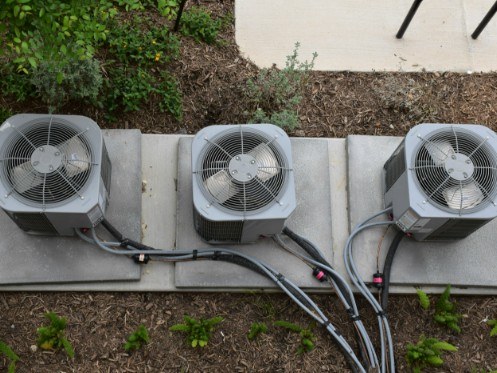
Adding a new central air conditioner—or replacing an older AC or heat pump—is a big decision. Comfort matters, but so does efficiency. After all, the system you choose will directly shape your monthly energy bills for years to come. One of the best ways to compare options is by looking at SEER ratings.
SEER (Seasonal Energy Efficiency Ratio) gives you a clear picture of how much electricity an AC or mini-split will use and what it will cost to keep your home cool. This guide explains how SEER is measured, how new SEER2 standards work, and how these ratings can help you estimate savings over the life of your system.
What Are SEER Ratings?
The Seasonal Energy Efficiency Ratio measures how efficiently an air conditioner or heat pump turns electricity into cooling power. It’s calculated as the total cooling output of the system (in BTUs) divided by the total electricity it uses (in kilowatt-hours) over an entire cooling season.
Why is this seasonal perspective important? Because AC systems don’t operate under one steady condition. Their workload changes constantly depending on outdoor heat and humidity. The hotter and more humid it is, the harder the system works, which means more energy consumption.
A unit with a higher SEER rating will use less energy than a similar-sized system with a lower rating. Each step up in SEER translates into roughly 7% more efficiency. For example, a 15-SEER system is about 7% more efficient than a 14-SEER system.
The Minimum Efficiency Standards
Efficiency requirements aren’t the same everywhere. As of January 2023, all new central AC units, heat pumps, and ductless mini-splits installed in Idaho must be at least 14 SEER (about 13.4 under SEER2, which we’ll explain below).
To put this in perspective: if your system was installed before 2006, there’s a good chance it’s rated 10 SEER or less. Replacing that older unit with today’s minimum standard would typically cut your annual cooling costs by nearly 30%.
How Is SEER Tested and Calculated?
The only way to measure SEER is to test the unit under varying conditions. During certification, the system is operated at outdoor temperatures ranging from 65°F up to 104°F. Engineers then measure how long it takes to cool a space and how much energy it consumes at each condition.
By simulating a full cooling season—from mild spring days to peak summer afternoons—testers can calculate the total kilowatt-hours the unit would use. Divide that by the cooling output, and you get the SEER rating.
From SEER to SEER2: The New Standard
As of 2023, the Department of Energy requires all manufacturers to rate systems using SEER2 instead of the older SEER method. The testing itself is more rigorous, designed to reflect real-world performance rather than controlled lab conditions.
Because of the tougher testing, SEER2 numbers look slightly lower—about 4.3% to 4.8% lower than the old SEER rating. For example:
14 SEER ≈ 13.4 SEER2
16 SEER ≈ 15.2 SEER2
In Idaho, the minimum efficiency requirement is now 13.4 SEER2.
What SEER Means for Your Energy Costs
The whole point of SEER and SEER2 ratings is to help you estimate savings. Let’s break it down with an example.
Say you currently have a 3-ton, 10-SEER system. Replacing it with a 3-ton, 18-SEER2 unit would drop your annual cooling costs by almost 90%. For homeowners in the Boise area, that translates into about $150 in yearly savings. If instead you went with the minimum 13.4-SEER2 unit, you’d still save, but closer to $80 per year.
That may not sound like much on its own—but multiply it by the 15-year average lifespan of a new system, and the numbers become more meaningful.
13.4 SEER2 system: about $3,200 in cooling costs over 15 years.
16 SEER2 system: about $2,650 over the same period.
That’s a $550 lifetime difference in energy bills.
Balancing Efficiency and Upfront Cost
So how do you decide? Start by comparing the lifetime savings against the upfront price difference. If a 16-SEER2 unit costs $1,000 more than a 13.4-SEER2 unit but only saves $550 over its life, the lower-efficiency unit is more cost-effective.
On the other hand, if your budget allows and reducing energy use is a priority, it’s always smart to choose the highest SEER rating available. The extra efficiency reduces your environmental footprint and offers peace of mind knowing your system is working as efficiently as possible.
It’s also worth remembering that efficiency isn’t the only factor. An oversized or undersized system—no matter how efficient—will waste energy and struggle to keep your home comfortable. That’s why it pays to work with a HVAC technician. They’ll evaluate your home’s size, insulation, ductwork, and cooling needs to recommend the right unit for your situation. In many cases, the “best” choice isn’t just the system with the highest SEER rating, but the one that’s properly matched to your home.
Climate also plays a role. In hot, humid regions where AC runs almost year-round, higher SEER systems quickly pay for themselves. Here in Idaho, where summers are warm but relatively short, it often makes sense to strike a balance between efficiency and cost.
The Bottom Line
SEER and SEER2 ratings aren’t just technical jargon—they’re tools to help you make a smart, informed choice about one of your home’s biggest comfort systems. By looking at efficiency ratings alongside price, lifespan, and local climate, you can find the right fit for your home and your wallet.
Trusted HVAC Service in Boise and the Treasure Valley
Choosing the right AC or heat pump doesn’t have to be overwhelming. With more than 40 years of experience, Perfect has helped thousands of Treasure Valley homeowners find the perfect balance of comfort, cost, and efficiency.
Our certified technicians handle installation, repair, and maintenance for all types of HVAC systems, and we’re here to answer your questions about SEER, SEER2, or any other efficiency standards. We also offer plumbing and indoor air quality solutions to keep your whole home running smoothly.
If you’re thinking about a new system—or just want expert advice—call us today to schedule a consultation.